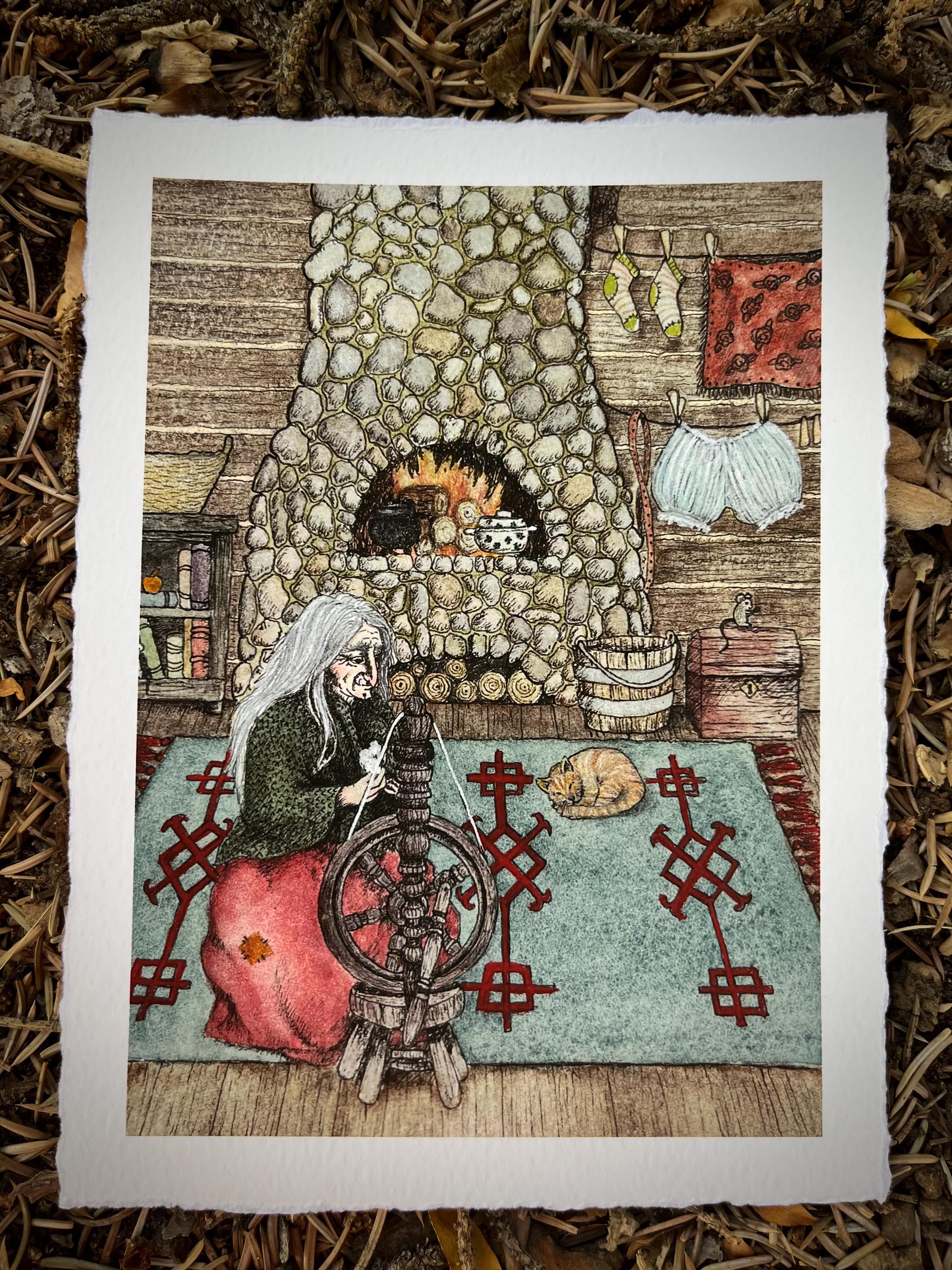
Before writing my little picture book about Baba Yaga, Have You Met the Witch of the Wood? I started to hear modern commentary within New Age parent circles that hags needed to be removed from children's literature and imagery because women who want to identify as "witches," or "wild women," essentially don't want to be associated with anything ugly or evil. That is understandable, given that we live in a society that values the highly commodifiable Maiden, but not the Mother, and never the Crone. That disdain for the elderly wise woman harkens all the way back to the original witch trials of Europe. The greatest threat to the Church's consolidation of power as it bleached the final relics of paganism out of Europe, was in fact village wise women, who held the old ways for their people. So, when modern day "witches," reject her in the name of feminism, I sigh.... Because that's essentially burning her all over again, while also attempting to identify with her. There were no "witches," before man created them to persecute women for being divergent. There were seers, healers, midwives, plant-knowers, etc. but not witches. To identify as such, is to align oneself with the long-nosed hag at the edge of the wood.
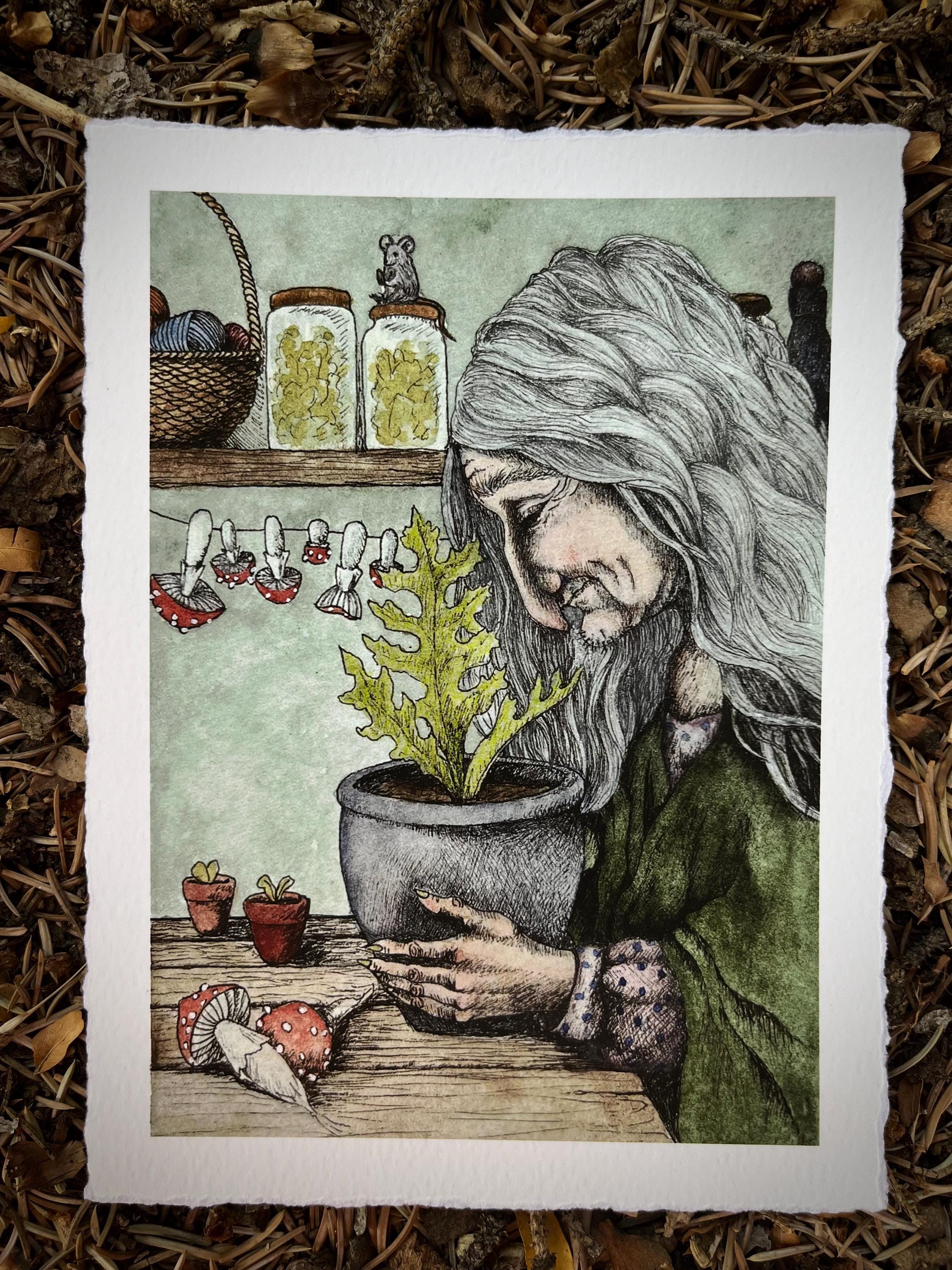
Baba Yaga and others like her are hidden relics of old goddesses and wise women who could not be erased. They persisted... reimagined and nestled into folklore. What was once perhaps a Scythian fire goddess became a canibalistic and capricious witch of the wood. She still holds the fire of ancestral wisdom in her skull fence. She still blesses and initiates those her make their way to her, but she adapted from Goddess to fairytale in order to stay with her people.
So..... this book was my little way of saying "NO! The Witch of the Wood has so much to teach us and our children."
But why does she give some children golden apples and eat others? Because she's nature embodied. Nature nurtures us, yes... but she also consumes. Death is a natural part of life. She and her little hut exist in the liminal space between worlds. The woods are liminal... a dead tree is anything but dead, as myriad life explodes out of it. Leaves fall and decompose into dirt where critters and mycelium thrive. Life/death/life/death/life. So many worlds unseen. She's an intermediary between the dead and the living. We, like all things, return to the earth one day, and she knows all about it. Deep down children wisely know that, and even find it a little bit tantalizing (don't we all). To learn from a hag is to learn the nature of life, and how to step into our place in it. Baba Yaga doesn't "eat people," because she's evil. She eats fools, because the woods eat fools. When you learn to listen to nature and your own gut, she can be incredibly generous. She, with her skull-capped garden gate is a supreme initiator as her guests transition from youth to adulthood. She prepares them to successfully navigate the challenges life will soon confront them with, or not.. she's even been known to give a rotten girl a rotten apple instead of a golden one. While that might seem like a punishment, an old apple is full of seeds. Seeds imply potential for growth. From my perspective, we need more of her these days.
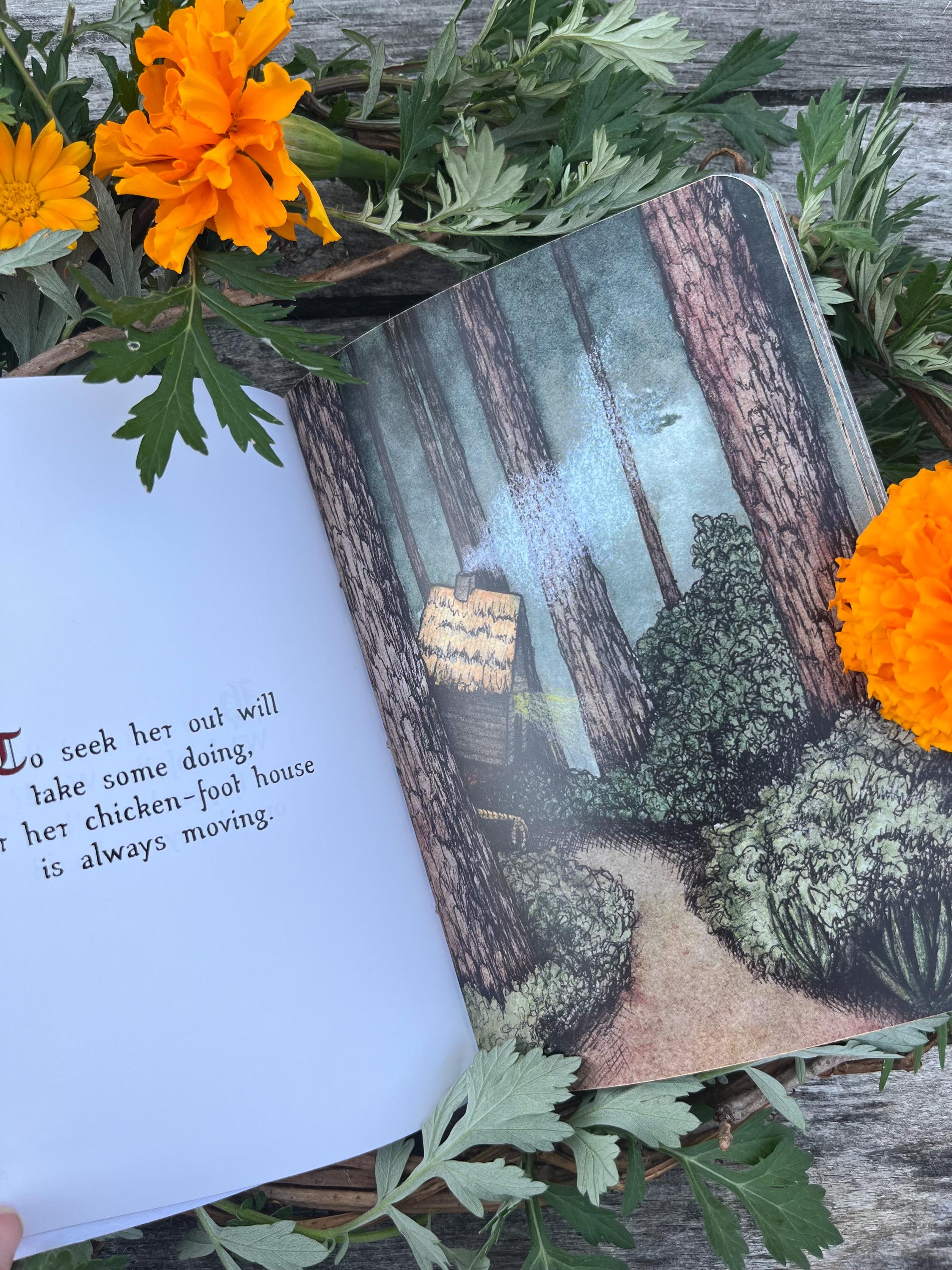
So at my house, we read her stories, and the stories of many other hags, and we discuss them. I want my kids to strive for sovereignty rather than obedience, and to listen to nature and the nature that speaks through them when something doesn't feel right, and when it does. To erase her, would not be a kindness to anyone except the demons of late-stage capitalism that would have us believe a woman is only as good and valuable as she is meek and youthfully attractive. So let's not.... Let's go meet her, the Witch of the Wood. She's calling her children back to the wood.